
Mahale Mountains
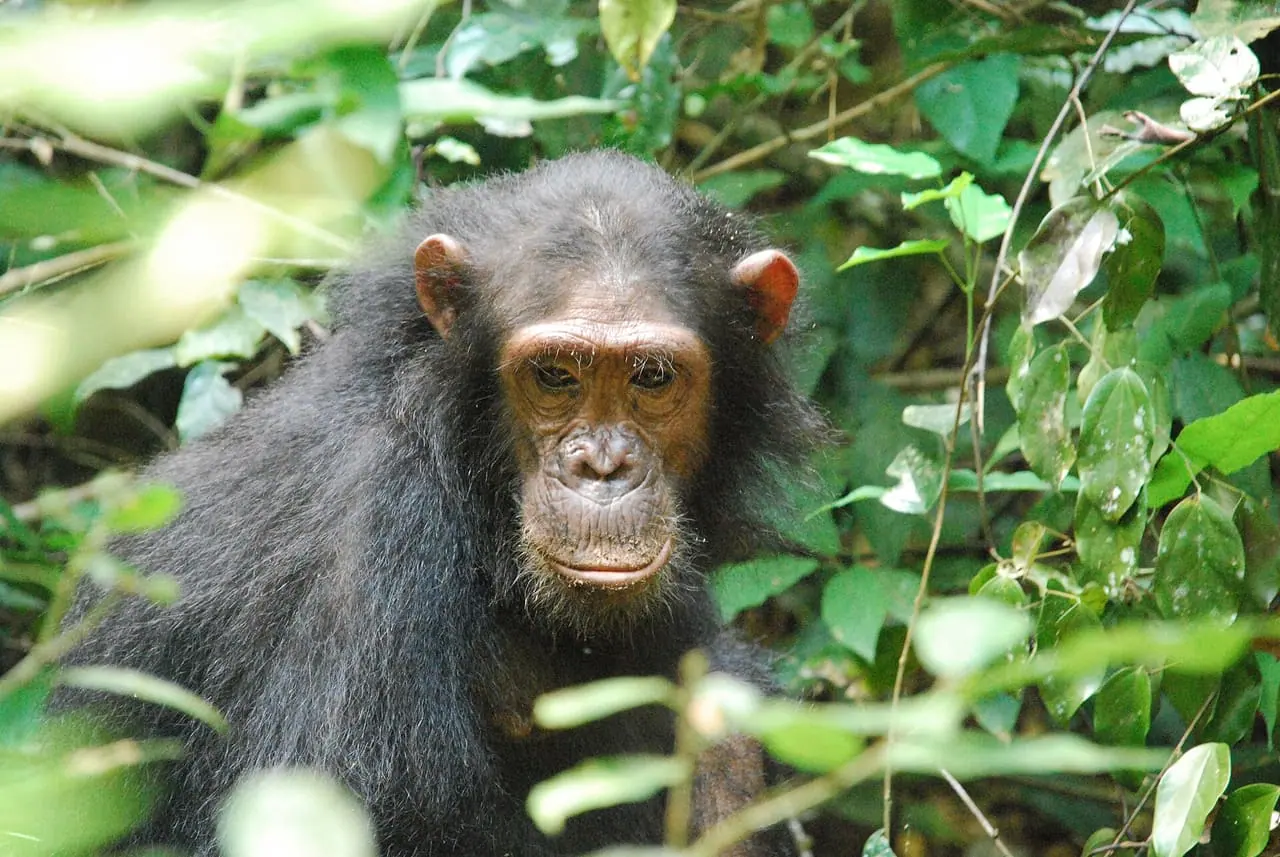
Remote and majestic, where the rainforest meets Lake Tanganyika. Home to the world's largest population of wild chimpanzees.
What you come here for
- Around a thousand chimpanzees, habituated to researchers and visitors
- Red colobus, blue monkey and vervet in the forest
- Lion, leopard and elephant in the mountains away from the lake
- Cichlids and the endemic fish of Lake Tanganyika
- Forest birds, including several Tanganyika-endemic species
Established
1985
Size
About 1,613 km²
Setting
On the eastern shore of Lake Tanganyika, Africa’s deepest lake
Getting in
Light aircraft from Dar es Salaam or Kilimanjaro, then boat
Best time
May to October, outside the long rains
The shaded block is the boundary as it is mapped; the inset is the whole country, so you can see how far this is from anywhere else. Boundaries are indicative at this scale, not survey data.
On the map
Where Mahale Mountains sits
Mahale Mountains is part of the Western Circuit, which is how we usually build it into a route rather than visiting it on its own.
Nearby, on the same circuit
- Established
- 1985
- Size
- About 1,613 km²
- Setting
- On the eastern shore of Lake Tanganyika, Africa’s deepest lake
- Getting in
- Light aircraft from Dar es Salaam or Kilimanjaro, then boat
The animals
Who lives here, and what to look for
5 of the animals we track across Tanzania are recorded in Mahale Mountains. What each one means on an actual drive is below — this is what your guide is scanning for.
Big cats
Leopard
Lake Manyara is famous for leopards that climb into sausage trees; everywhere else they are nocturnal and shy.
Primates
Chimpanzee
Gombe is where Jane Goodall started; habituated communities let you walk with them for an hour.
Red colobus monkey
Jozani on Zanzibar protects the last population of the endemic Zanzibar red colobus.
Blue monkey & angolan colobus
Udzungwa holds several primates found nowhere else, including the Kipunji described only in 2005.
Herds & grazers
Elephant
Tarangire is named for them; herds of a hundred gather on the river between June and November.
When to visit
May to October, outside the long rains. These are the months our season planner already puts animals or conditions here:
The long rains begin to push the herds toward the Western Corridor, while the lakeshore forests of Gombe and Mahale come alive with chimpanzees.
29°C · Long rains begin · crowds Shoulder
First rains pull the herds out of the north in a slow column back toward the short-grass plains, and the whole country greens up behind them.
27°C · Short rains begin · crowds Shoulder
What to do here
Safaris that include Mahale Mountains
Questions people ask about Mahale Mountains
Put Mahale Mountains into a real itinerary
Tell us who is travelling and when. We build the route around where the animals are standing that week, and price it properly — no hidden park fees at the gate.