
Nyerere National Park (Selous)
Africa's largest stand-alone national park, offering a wild and remote experience with boat safaris on the Rufiji River.
What you come here for
- African wild dog, with one of the strongest populations in the country
- Very large elephant herds, and black rhino in small numbers
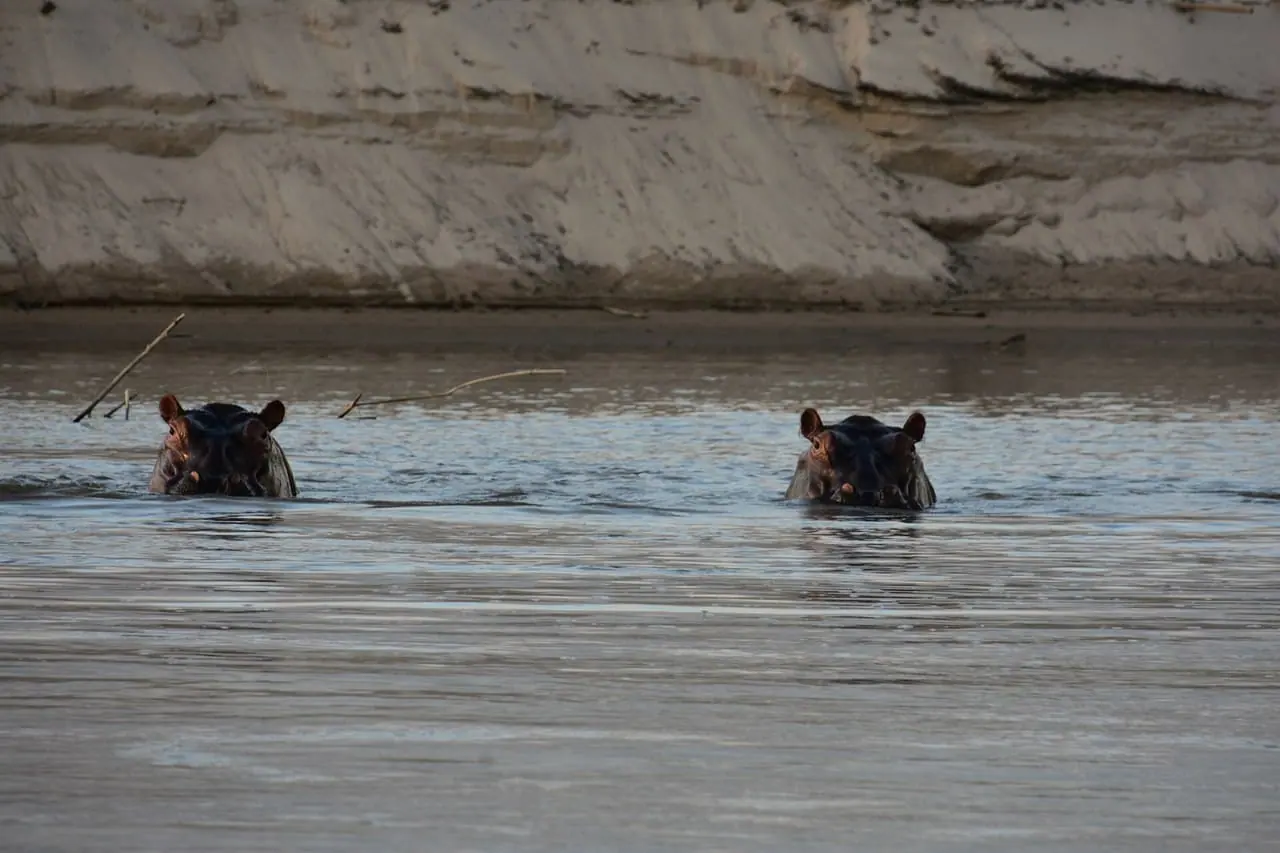
- Hippo, crocodile and the water-dependent antelope along the Rufiji
- Lion, leopard and cheetah on the open Ruaha River plains
- Over 400 bird species, including the near-endemic Uluguru and Rufiji specials
Size
About 30,893 km², Tanzania’s largest protected area
Renamed
From Selous to Nyerere in 2019
Status
UNESCO World Heritage Site since 1982
Getting in
Light aircraft from Dar es Salaam to the park airstrips
Best time
June to October, and December to February for birding
The shaded block is the boundary as it is mapped; the inset is the whole country, so you can see how far this is from anywhere else. Boundaries are indicative at this scale, not survey data.
On the map
Where Nyerere National Park (Selous) sits
Nyerere National Park (Selous) is part of the Southern Circuit, which is how we usually build it into a route rather than visiting it on its own.
Nearby, on the same circuit
- Size
- About 30,893 km², Tanzania’s largest protected area
- Renamed
- From Selous to Nyerere in 2019
- Status
- UNESCO World Heritage Site since 1982
- Getting in
- Light aircraft from Dar es Salaam to the park airstrips
The animals
Who lives here, and what to look for
17 of the animals we track across Tanzania are recorded in Nyerere National Park (Selous). What each one means on an actual drive is below — this is what your guide is scanning for.
Big cats
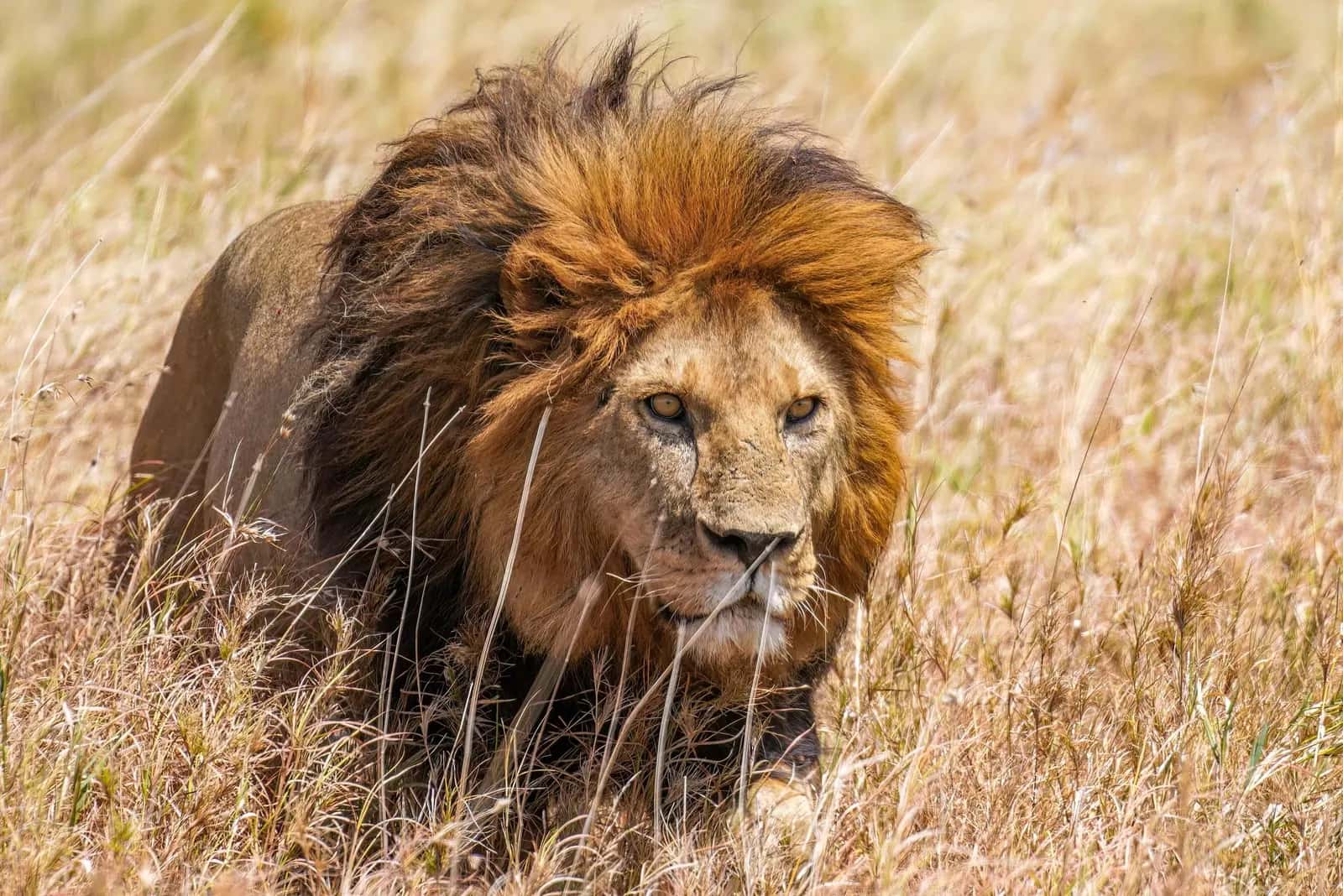
Lion
Serengeti and Ruaha hold the biggest populations; Ngorongoro is the most reliable place to see them any day of the year.
Cheetah
Short grass of the Serengeti plains and the open Ndutu area are the best hunting theatre.
African wild dog
Ruaha is the strongest chance in the country; packs den between late February and April.
Rare & hard to see
Sable & roan antelope
Ruaha woodland is the classic place for sable; both are absent from the northern circuit parks.
Serval
Dawn and dusk on the short-grass plains; they hunt rodents by sound, so watch them tilt their heads.
Primates
Chimpanzee
Gombe is where Jane Goodall started; habituated communities let you walk with them for an hour.
Red colobus monkey
Jozani on Zanzibar protects the last population of the endemic Zanzibar red colobus.
Rivers & lakes
Hippopotamus
The Tarangire and Ruaha rivers are loud with them at dusk as they leave the water to graze.
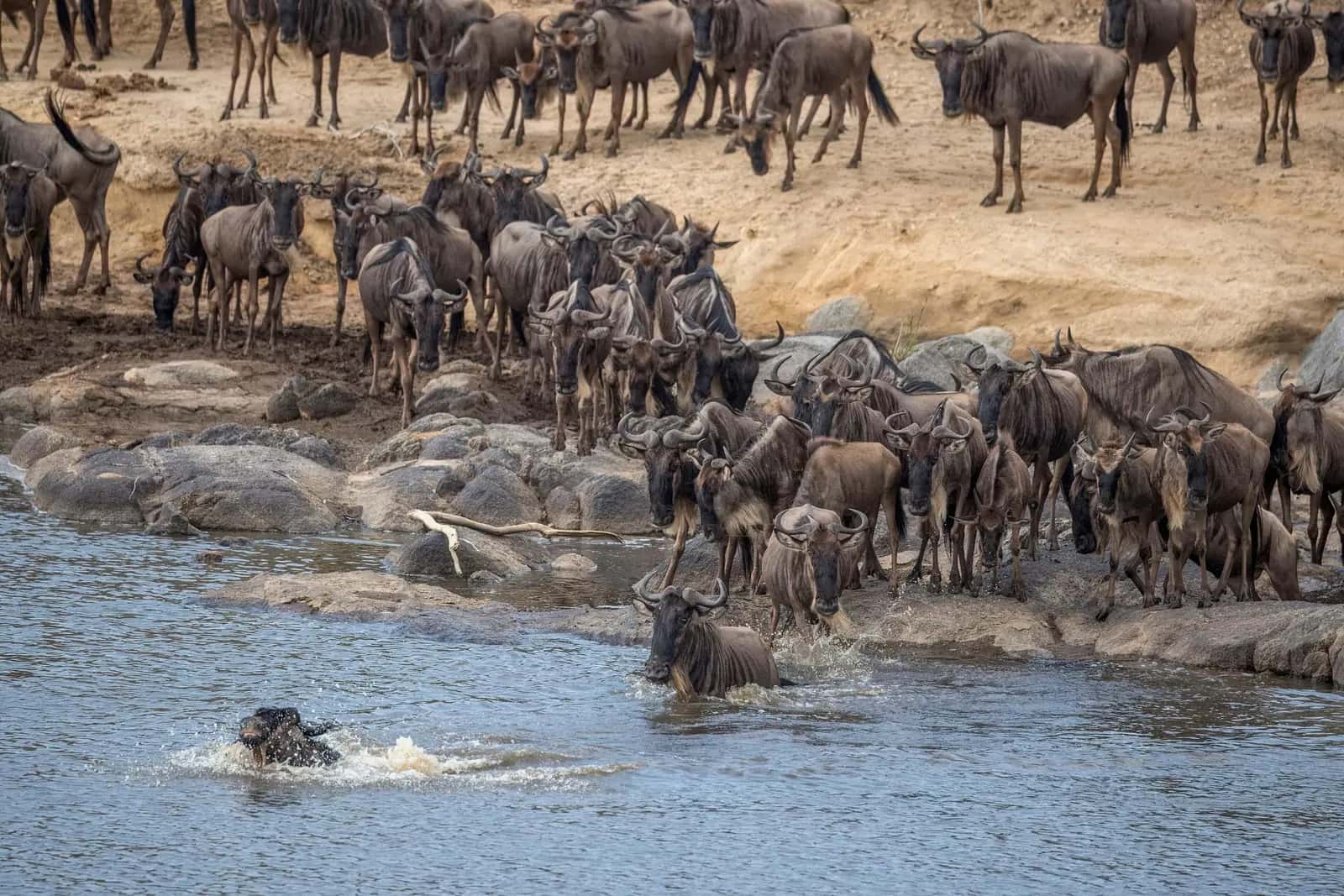
Nile crocodile
The Mara River crocodiles are the ones that wait for the wildebeest crossing in July and August.
Waterbuck & reedbuck
Always within a few hundred metres of water; the Nyerere floodplain holds the largest numbers.
Herds & grazers
Elephant
Tarangire is named for them; herds of a hundred gather on the river between June and November.
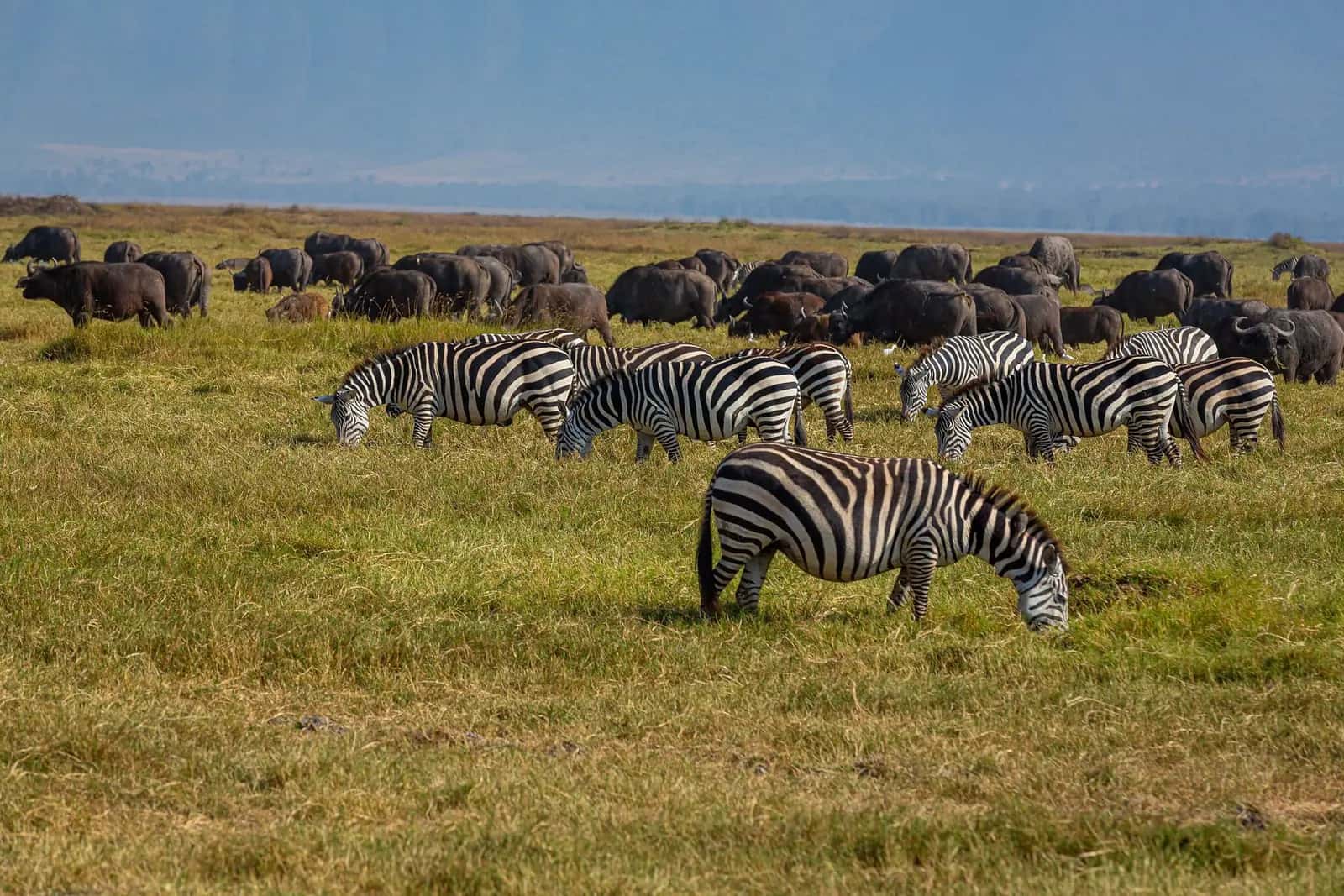
Cape buffalo
Huge herds move through the crater floor and the Tarangire riverine forest year-round.
Giraffe
The Masai giraffe of the Serengeti and the reticulated giraffe around Tarangire look different up close.
Plains zebra
Part of the two-million-animal migration loop; calving happens on the southern plains in February.
Wildebeest
The engine of the migration — follow the herds from Ndutu in February to the Mara River in July and August.
Topi
Standing shoulder to shoulder on the short green grass of the southern plains.
Birds
Fish eagle & large raptors
A fish eagle calls over almost every water body in the country — the sound of an African morning.
When to visit
June to October, and December to February for birding. These are the months our season planner already puts animals or conditions here:
The Rufiji runs high through Nyerere, hippos claim every pool, and the south offers wild, uncrowded game at the year’s lowest rates.
27°C · Long rains · crowds Low
What to do here
Safaris that include Nyerere National Park (Selous)
Questions people ask about Nyerere National Park (Selous)
Put Nyerere National Park (Selous) into a real itinerary
Tell us who is travelling and when. We build the route around where the animals are standing that week, and price it properly — no hidden park fees at the gate.