
Tarangire National Park
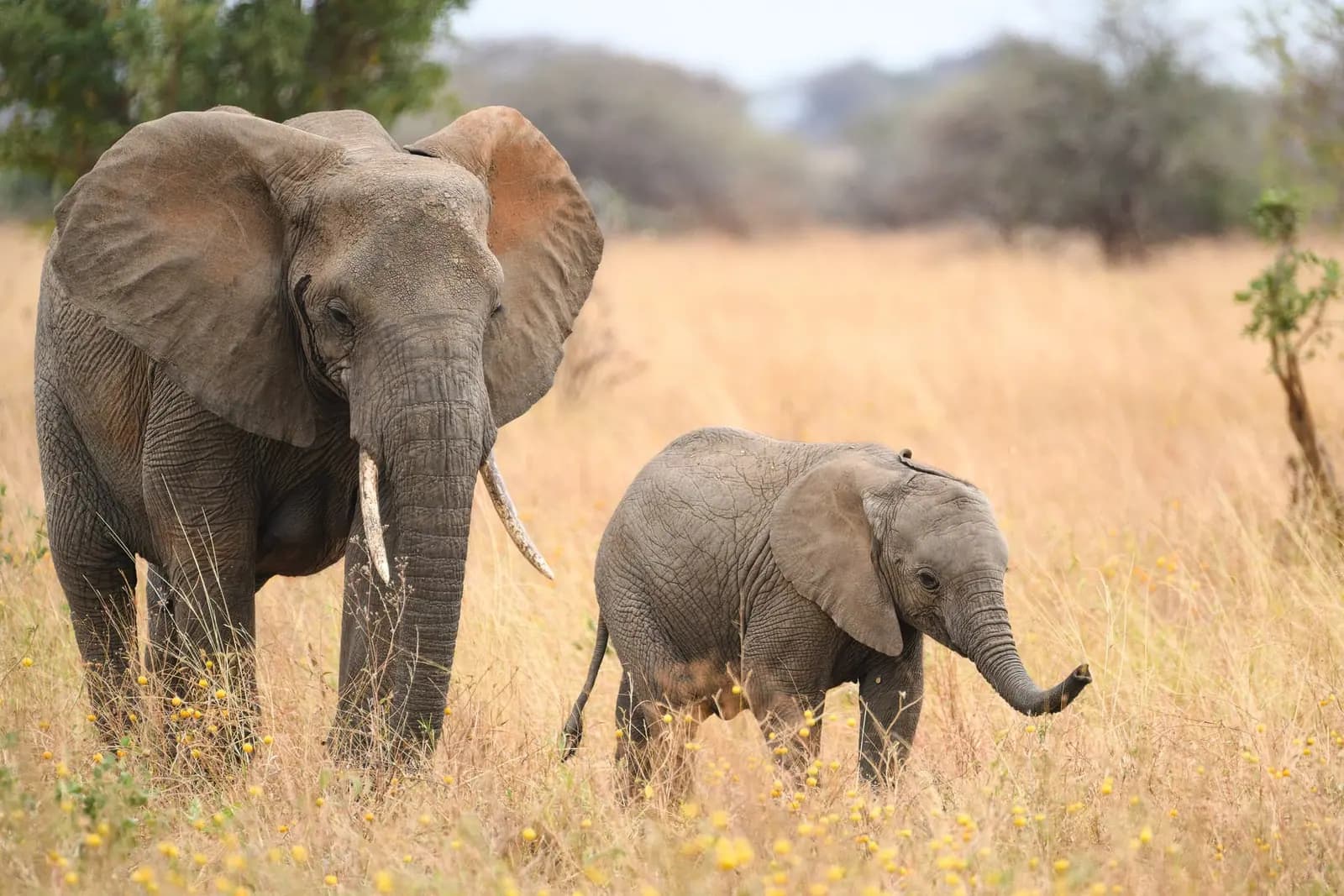
Famous for its giant baobab trees and massive elephant herds that congregate along the Tarangire River during the dry season.
What you come here for
- Elephant herds that can run into the hundreds, the largest concentration in northern Tanzania
- Giant baobabs, some estimated at several hundred years old
- Lion, leopard and both lesser and greater kudu
- Gerenuk and the fringe-eared otter, rare elsewhere
- More than 550 recorded bird species, the highest of any single park in Tanzania
Established
1970
Size
About 2,850 km²
Famous for
Elephants and baobabs
Distance from Arusha
Roughly 120 km, a comfortable 2.5-hour drive
Best time
June to October, when animals concentrate along the river
The shaded block is the boundary as it is mapped; the inset is the whole country, so you can see how far this is from anywhere else. Boundaries are indicative at this scale, not survey data.
On the map
Where Tarangire National Park sits
Tarangire National Park is part of the Northern Circuit, which is how we usually build it into a route rather than visiting it on its own.
Nearby, on the same circuit
- Established
- 1970
- Size
- About 2,850 km²
- Famous for
- Elephants and baobabs
- Distance from Arusha
- Roughly 120 km, a comfortable 2.5-hour drive
The animals
Who lives here, and what to look for
17 of the animals we track across Tanzania are recorded in Tarangire National Park. What each one means on an actual drive is below — this is what your guide is scanning for.
Big cats
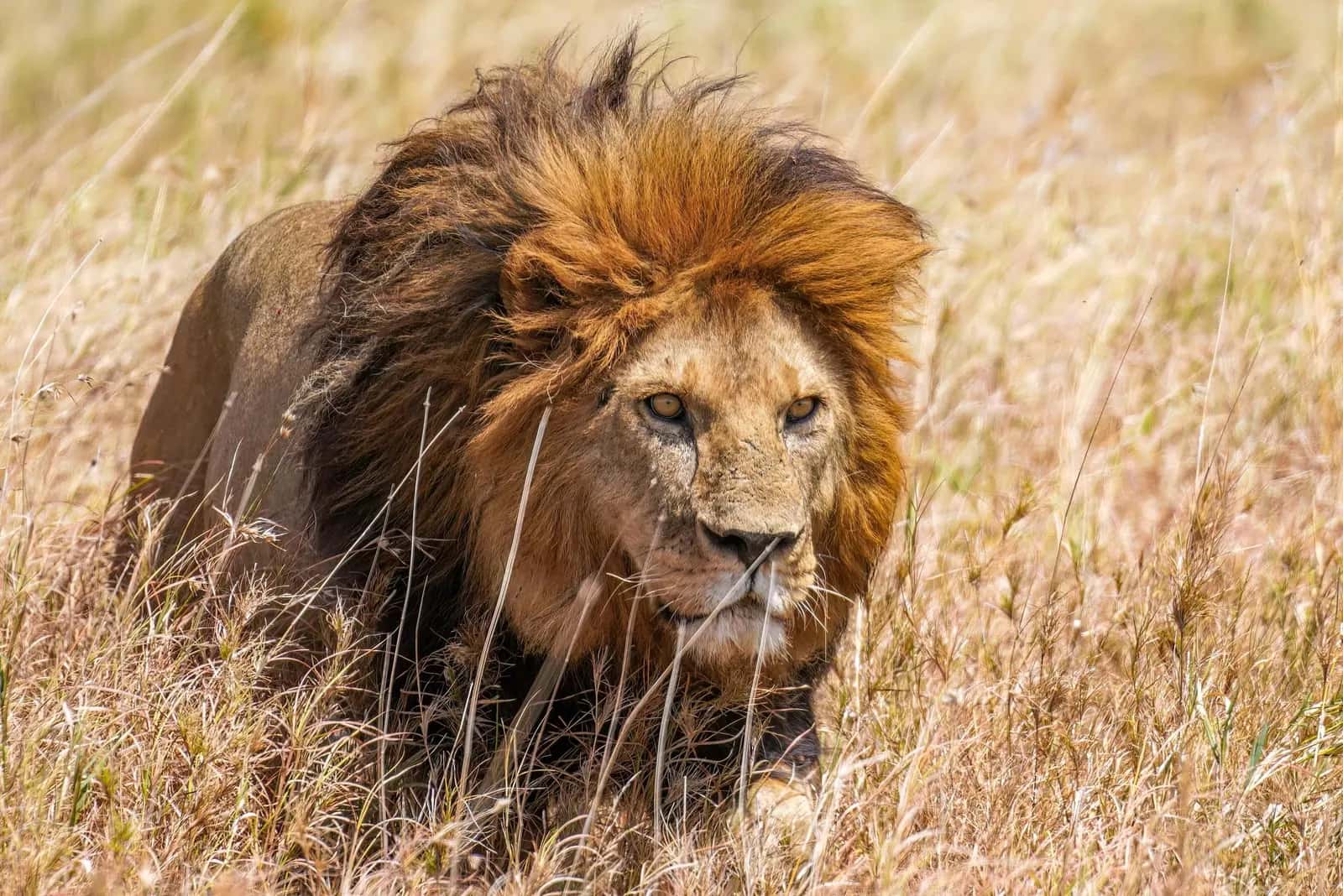
Lion
Serengeti and Ruaha hold the biggest populations; Ngorongoro is the most reliable place to see them any day of the year.
Leopard
Lake Manyara is famous for leopards that climb into sausage trees; everywhere else they are nocturnal and shy.
African wild dog
Ruaha is the strongest chance in the country; packs den between late February and April.
Rare & hard to see
Black rhinoceros
The crater floor carries a small, closely guarded family group — the most dependable place to see one.
Mongoose & meerkats
Banded and dwarf mongoose live in the kopjes; see them standing sentry on a termite mound.
Primates
Olive baboon
Troops of two hundred cross the road at Ngurdoto Crater almost on schedule.
Rivers & lakes
Hippopotamus
The Tarangire and Ruaha rivers are loud with them at dusk as they leave the water to graze.
Nile crocodile
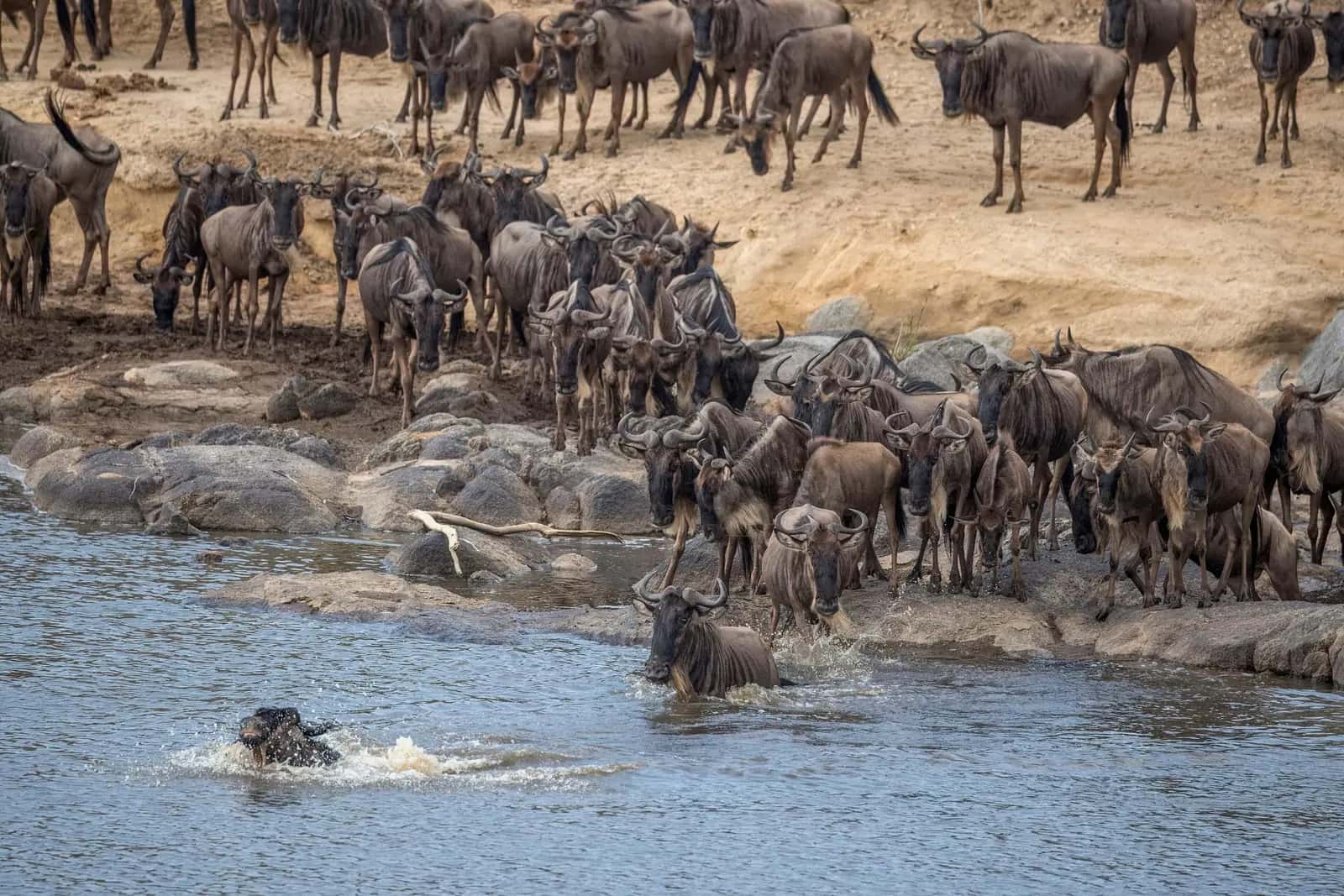
The Mara River crocodiles are the ones that wait for the wildebeest crossing in July and August.
Waterbuck & reedbuck
Always within a few hundred metres of water; the Nyerere floodplain holds the largest numbers.
Herds & grazers
Elephant
Tarangire is named for them; herds of a hundred gather on the river between June and November.
Cape buffalo
Huge herds move through the crater floor and the Tarangire riverine forest year-round.
Giraffe
The Masai giraffe of the Serengeti and the reticulated giraffe around Tarangire look different up close.
Plains zebra
Part of the two-million-animal migration loop; calving happens on the southern plains in February.
Wildebeest
The engine of the migration — follow the herds from Ndutu in February to the Mara River in July and August.
Topi
Standing shoulder to shoulder on the short green grass of the southern plains.
Birds
Fish eagle & large raptors
A fish eagle calls over almost every water body in the country — the sound of an African morning.
Weaver & kingfisher
Tarangire alone records over 550 species; the wet season from November to April is when the migrants arrive.
When to visit
June to October, when animals concentrate along the river. These are the months our season planner already puts animals or conditions here:
Tens of thousands of wildebeest calve within days across the Ndutu grasses, and every predator in the ecosystem gathers for the easiest season of the year.
27°C · Short rains easing · crowds High
Flamingos line the shores of Manyara and Natron, the crater rim clears of cloud, and the plains stay emerald with nowhere to be.
25°C · Long rains ending · crowds Low
As the dry season tightens, Tarangire’s baobabs frame hundreds of elephants packed along the shrinking river, and the first herds reach the north.
26°C · Dry season begins · crowds High
What to do here
Safaris that include Tarangire National Park
Questions people ask about Tarangire National Park
Put Tarangire National Park into a real itinerary
Tell us who is travelling and when. We build the route around where the animals are standing that week, and price it properly — no hidden park fees at the gate.